 Grampian Sailboats
Compare Grampian Models
Every Grampian model side by side, from the 16½-foot Grampian 17 to the 46-foot yawl. Pick the boats you want to compare, and switch between feet and metres.
| Model |
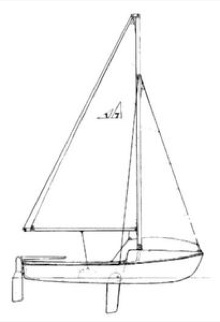 Grampian 17 |
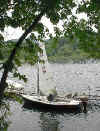 Classic 22 |
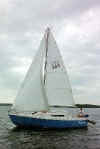 Grampian 23 |
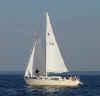 Grampian 26 |
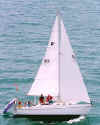 Discovery 7.9 |
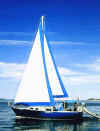 Grampian 28 |
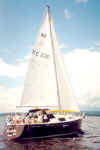 Grampian 30 |
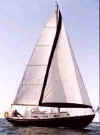 Classic 31 |
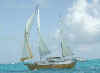 Grampian 34 |
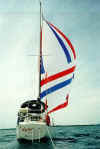 Grampian 2-34 |
 Grampian 37 |
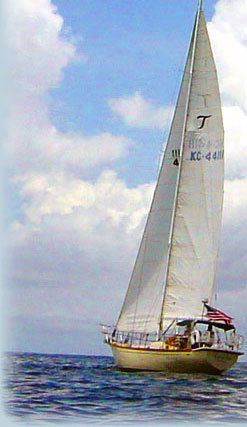 Grampian 46 |
|---|---|---|---|---|---|---|---|---|---|---|---|---|
| The boat | ||||||||||||
| Designer | Ian Proctor | George Cuthbertson (C&C) | Alex McGruer | Alex McGruer | Alex McGruer† | Rolf van der Sleen | Alex McGruer | Peter van Dyne | Axel Schmidt, from the Triangle 32 | — | Sparkman & Stephens (design 1718) | William Tripp Jr. |
| Built | From 1969 | Designed 1965 | From 1972 | 1967–1977 | Late 1970s | From 1975 | 1969–1977 | From 1964† | From 1973 | From 1974 | From 1964 | Mid-1960s on |
| Number builtApproximate | — | — | About 300 | About 1,000 | Few | About 150 | About 350, plus ~50 cutters | — | About 50 | About 50 | About 30 | About 12 |
| Keel | Centreboard | Fin keel† | Fixed keel or centreboard | Fin keel (keel/CB option) | Fin keel† | Fin keel, skeg-hung rudder† | Fixed keel or keel/CB | Fin keel† | Fin keel, skeg-hung rudder† | Fin keel, skeg-hung rudder† | Fin keel | Keel/centreboard |
| Rig | Fractional sloop | Fractional sloop† | Masthead sloop† | Masthead sloop† | Masthead sloop† | Masthead sloop† | Masthead sloop; tall rig and cutter options | Cutter or sloop† | Sloop or ketch | Masthead sloop† | Masthead sloop; yawl option | Yawl |
| Dimensions | ||||||||||||
| Length overall | 16' 6"5.03 m | 22' 4"6.81 m | 23' 3"7.09 m | 26'7.92 m | 26'7.92 m | 28'8.53 m† | 29' 9"9.07 m | 30' 11"9.42 m† | 33' 7"10.24 m | 33' 9¼"10.29 m | 37' 4"11.38 m† | 46'14.02 m |
| Waterline lengthLWL | 15' 6"4.72 m† | 17' 5"5.31 m | 20' 11"6.38 m | 21'6.40 m | 21' 9"6.63 m | 24' 6"7.47 m† | 25' 6"7.77 m | 22' 3½"6.79 m† | 26' 5½"8.06 m | 28'8.53 m | 26' 3¼"8.01 m† | 31' 3"9.53 m |
| Beam | 6' 2¼"1.88 m† | 7'2.13 m | 8'2.44 m | 8' 4"2.54 m | 8' 4"2.54 m | 9' 6"2.90 m† | 9' 6"2.90 m | 8' 4¾"2.56 m† | 10'3.05 m | 10'3.05 m | 10' 2"3.10 m† | 12'3.66 m |
| DraftFixed keel, or board up | 0' 8"0.20 m† 4' 4" board down1.32 m board down |
3' 9"1.14 m | 3' 1"0.94 m C/B 2' 4½"–5' 4"C/B 0.72–1.63 m |
4' 3"1.30 m† Keel/CB 3'–6'Keel/CB 0.91–1.83 m |
3' 9"1.14 m | 4' 10"1.47 m† Shoal keel 3' 9"Shoal keel 1.14 m |
4' 8"1.42 m Keel/CB 3' 3"–7'Keel/CB 0.99–2.13 m |
4' 4¾"1.34 m† | 5'1.52 m | 5'1.52 m | 5' 10"1.78 m† | 4' 11"1.50 m 10' 1" board down3.07 m board down |
| Headroom | — | 3' 6"1.07 m | 5' 4"1.63 m 6' 0" at the pop-top1.83 m at the pop-top |
6'1.83 m | 6'1.83 m | 6' 2"1.88 m | 6' 4"1.93 m | — | 7'2.13 m | 6' 5"1.96 m | — | — |
| Weight | ||||||||||||
| Displacement | 490 lb222 kg† Sources differ: up to ~950 lb |
1,650 lb748 kg | 3,200 lb1,451 kg | 5,600 lb2,540 kg | 5,100 lb2,313 kg | 6,900 lb3,130 kg† | 8,600 lb3,901 kg | 9,722 lb4,410 kg† | 12,000 lb5,443 kg | 12,000 lb5,443 kg | 16,400 lb7,439 kg | 25,000 lb11,340 kg |
| Ballast | — | 850 lb386 kg | 1,150 lb522 kg | 2,600 lb1,179 kg | 2,300 lb1,043 kg | 3,060 lb1,388 kg† | 3,870 lb1,755 kg | — | 5,170 lb2,345 kg† | 5,170 lb2,345 kg† | 7,400 lb3,357 kg† | 9,000 lb4,082 kg† |
| Rig and sails | ||||||||||||
| Sail areaMain and foretriangle, plus mizzen on ketches and yawls | 152 ft²14.1 m² | 200 ft²18.6 m²† | 241 ft²22.4 m²† | 326 ft²30.3 m²† | 318 ft²29.5 m² | 384 ft²35.7 m²† | 425 ft²39.5 m²† | 440 ft²40.9 m²† | 551 ft²51.2 m²† | 521 ft²48.4 m² | 639 ft²59.4 m²† | 881 ft²81.8 m²† |
| Mainsail | — | 122 ft²11.3 m² | 110 ft²10.2 m² | 156 ft²14.5 m² | 140 ft²13.0 m² | 165 ft²15.4 m²† | 190 ft²17.7 m² | 214 ft²19.9 m²† | 271 ft²25.2 m² Sloop; ketch 198 ft²Sloop; ketch 18.4 m² |
222 ft²20.6 m² | 338 ft²31.4 m² Sloop; yawl 294 ft²Sloop; yawl 27.3 m² |
348 ft²32.3 m² |
| Foretriangle (100%)I × J ÷ 2 | — | 79 ft²7.3 m²† | 131 ft²12.1 m²† | 169 ft²15.7 m² | 183 ft²17.0 m²† | 219 ft²20.3 m²† | 203 ft²18.9 m²† | 226 ft²21.0 m²† | 202 ft²18.7 m²† | 299 ft²27.8 m² | 301 ft²28.0 m² | 397 ft²36.9 m²† |
| HeadsailsJibs and genoas, as listed by the builder | — | Jib · 78 ft²Jib · 7.2 m² | Jib · 108 ft²Jib · 10.0 m² Genoa · 174 ft²Genoa · 16.2 m² |
Genoa #1 · 286 ft²Genoa #1 · 26.6 m² Genoa #2 · 228 ft²Genoa #2 · 21.2 m² Genoa #3 · 125 ft²Genoa #3 · 11.6 m² |
Genoa (100%) · 178 ft²Genoa (100%) · 16.5 m² | — | Working jib · 143 ft²Working jib · 13.3 m² Genoa #1 · 340 ft²Genoa #1 · 31.6 m² Genoa #2 · 300 ft²Genoa #2 · 27.9 m² |
— | Jib · 185 ft²Jib · 17.2 m² Genoa #1 · 368 ft²Genoa #1 · 34.2 m² Genoa #2 · 285 ft²Genoa #2 · 26.5 m² Genoa #3 · 240 ft²Genoa #3 · 22.3 m² |
Working jib · 240 ft²Working jib · 22.3 m² Genoa #1 · 492 ft²Genoa #1 · 45.7 m² Genoa #2 · 452 ft²Genoa #2 · 42.0 m² Genoa #3 · 364 ft²Genoa #3 · 33.8 m² |
— | Jib · 335 ft²Jib · 31.1 m² Genoa #1 · 668 ft²Genoa #1 · 62.1 m² Genoa #2 · 478 ft²Genoa #2 · 44.4 m² Genoa #3 · 357 ft²Genoa #3 · 33.2 m² |
| Mizzen | — | — | — | — | — | — | — | — | 122 ft²11.3 m²† Ketch |
— | 75 ft²7.0 m² Yawl |
135 ft²12.5 m² |
| Spinnaker | 173 ft²16.1 m² | — | — | — | — | — | — | — | — | 604 ft²56.1 m² | — | — |
| Mast height above deckMasthead above the deck | — | ≈ 27' 9"≈ 8.46 m | ≈ 27' 8"≈ 8.43 m | ≈ 33' 6"≈ 10.21 m Spar 31' 9", stepped on the cabin topSpar 9.68 m, stepped on the cabin top |
≈ 33' 9"≈ 10.29 m | ≈ 37'≈ 11.28 m | ≈ 37' 5"≈ 11.40 m | ≈ 34'≈ 10.36 m | ≈ 38' 9"≈ 11.81 m | ≈ 43' 3"≈ 13.18 m | — | ≈ 48' 1"≈ 14.66 m |
| Air draftMasthead above the waterline, without antenna | — | ≈ 29' 9"≈ 9.07 m | 31'9.45 m† | ≈ 36' 2"≈ 11.02 m | ≈ 36' 5"≈ 11.10 m | ≈ 39' 9"≈ 12.12 m | ≈ 40' 5"≈ 12.32 m | ≈ 36' 5"≈ 11.10 m | ≈ 41' 11"≈ 12.78 m | ≈ 46' 5"≈ 14.15 m | — | ≈ 51' 10"≈ 15.80 m |
| Boom length | — | ≈ 10' 3"≈ 3.12 m | ≈ 9' 10"≈ 3.00 m | 11' 6"3.51 m | ≈ 10' 6"≈ 3.20 m | ≈ 11'≈ 3.35 m | ≈ 12' 6"≈ 3.81 m | ≈ 15'≈ 4.57 m | ≈ 12' 6"≈ 3.81 m | ≈ 12' 6"≈ 3.81 m | — | ≈ 17' 6"≈ 5.33 m |
| Forestay lengthFrom I and J | — | ≈ 22' 4"≈ 6.81 m | ≈ 28' 2"≈ 8.59 m | ≈ 34' 7"≈ 10.54 m | ≈ 35'≈ 10.67 m | ≈ 38' 5"≈ 11.71 m | ≈ 38' 6"≈ 11.73 m | ≈ 36' 1"≈ 11.00 m | ≈ 39' 8"≈ 12.09 m | ≈ 45'≈ 13.72 m | — | ≈ 50' 5"≈ 15.37 m |
| IForetriangle height, deck to forestay | — | 21'6.40 m† | 26' 4¾"8.05 m† | 33'10.06 m | 33' 3"10.13 m† | 36' 6"11.13 m† | 36' 10¾"11.25 m† Tall rig: I 40', P 35' 6"Tall rig: I 12.19 m, P 10.82 m |
33' 6"10.21 m† | 38' 3"11.66 m† Ketch rig |
42' 9"13.03 m† | — | 47' 7½"14.51 m† |
| JForetriangle base, stem to mast | — | 7' 6"2.29 m† | 9' 10¾"3.02 m† | 10' 3"3.12 m | 11'3.35 m† | 12'3.66 m† | 11'3.35 m† | 13' 6"4.11 m† | 10' 6½"3.21 m† | 14'4.27 m | — | 16' 8"5.08 m† |
| PMainsail luff | — | 23' 8½"7.23 m† | 23' 8½"7.22 m† | 28'8.53 m† | 28'8.53 m† | 31' 6"9.60 m† | 31'9.45 m† | 29' 6"8.99 m† | 33'10.06 m† | 37'11.28 m | — | 41'12.50 m† |
| EMainsail foot | — | 9' 9"2.97 m† | 9' 3½"2.83 m† | 11' 2"3.40 m† | 10'3.05 m† | 10' 6"3.20 m† | 12'3.66 m† | 14' 6"4.42 m† | 12'3.66 m† | 12'3.66 m | — | 17'5.18 m† |
| Performance (calculated) | ||||||||||||
| Hull speed1.34 × √LWL | 5.3 kn | 5.6 kn | 6.1 kn | 6.1 kn | 6.2 kn | 6.6 kn | 6.8 kn | 6.3 kn | 6.9 kn | 7.1 kn | 6.9 kn | 7.5 kn |
| Ballast ratioBallast ÷ displacement | — | 52% | 36% | 46% | 45% | 44% | 45% | — | 43% | 43% | 45% | 36% |
| Sail area / displacementHigher = more power | 39.1 | 22.9 | 17.8 | 16.5 | 17.2 | 17.0 | 16.2 | 15.5 | 16.8 | 15.9 | 15.8 | 16.5 |
| Displacement / lengthHigher = heavier for her length | 59 | 139 | 156 | 270 | 221 | 209 | 232 | 392 | 289 | 244 | 404 | 366 |
| Capsize screeningUnder 2 is preferred offshore | 3.14 | 2.37 | 2.17 | 1.88 | 1.94 | 2.00 | 1.85 | 1.57 | 1.75 | 1.75 | 1.60 | 1.64 |
| Comfort ratioHigher = easier motion at sea | 4.2 | 10.0 | 14.2 | 22.7 | 20.2 | 20.7 | 24.6 | 35.2 | 30.0 | 28.8 | 38.7 | 39.3 |
| Living aboard | ||||||||||||
| Berths | 2 (cuddy) | 2 | 5 | 5 | 4 | 5 | 5 (6 optional) | — | 7 | 6 | — | 6–8 |
| Engine | — | — | Outboard | Outboard, or an inboard: Palmer (gas) or Yanmar (diesel) | — | Atomic 4 (gas) or Volvo diesel | Atomic 4 or Yanmar | Atomic 4† | Atomic 4 | Atomic 4 | — | 55 hp diesel |
| Fuel tank | — | — | — | 40 L (10½ US gal) | — | 20 gal† | 10 gal† | — | 26 gal | 26 gal | — | — |
| Water tank | — | — | 20 gal† | 20 gal† | — | 20 gal† | 15 gal† | — | 45 gal | 45 gal | — | — |
| Good to know | Daysailer and trailer-sailer; the smallest Grampian | Its moulds later became the Viking 22 | Trailerable pocket cruiser with a pop-top | The most popular Grampian | Raised-deck Grampian 26, built after hull No. 1000 | Cape Dory later built the Intrepid 28 from this design† | Proven offshore: Prospero sailed single-handed to Bermuda twice | Sold in various stages of construction, some finished by owners† | Center cockpit | Aft cockpit; a different boat from the Grampian 34. Later built as the Seaforth 34 | Also sold as the Walton 37 and the Classic 37 | The hull moulds have been found and are for sale |
Pick at least one model above to compare.
About these figures
Figures come from each model’s page on this site, taken from Grampian’s brochures, plans and owners. Where we don’t have a figure, it comes from sailboatdata.com and is marked †. Boats varied: keel and centreboard versions, tall rigs, different engines and owner changes, so check a particular boat before relying on a figure. Corrections are welcome through the Owners Registry.
What the calculated figures mean
- Mast height, air draft, boom and forestay
- Marked ≈ where they are worked out rather than published: masthead height from I (or from P plus the boom’s height on fractional rigs), air draft by adding the freeboard at the mast, boom length as the mainsail foot plus six inches, and the forestay from I and J. Add any masthead antenna or wind instruments to the air draft, and measure your own boat before a low bridge.
- Hull speed
- A rough top speed for a displacement hull: 1.34 × the square root of the waterline length in feet.
- Ballast ratio
- Ballast as a share of total weight. Around 40% or more gives good stiffness and resistance to heeling.
- Sail area / displacement
- Sail area relative to weight. Under 16 suits heavier cruisers, 16 to 20 is a lively all-rounder, and over 20 points to a performance boat.
- Displacement / length
- Weight relative to waterline length. Under 200 is light, 200 to 300 moderate, and over 300 heavy.
- Capsize screening
- Beam relative to weight. Under 2 is the usual guide for offshore sailing; a higher figure means a boat is more stable upside down too.
- Comfort ratio
- Ted Brewer’s measure of how gently a boat moves in a seaway. Around 20 to 30 is typical for coastal cruisers and over 30 for offshore boats.
These ratios come from the length, weight and sail figures in the table, so they inherit any uncertainty in those figures (for example, the Grampian 17’s weight).