 Grampian Sailboats
Grampian 46
Designed by William Tripp Jr. — about 12 built starting in the mid-sixties.
Photos
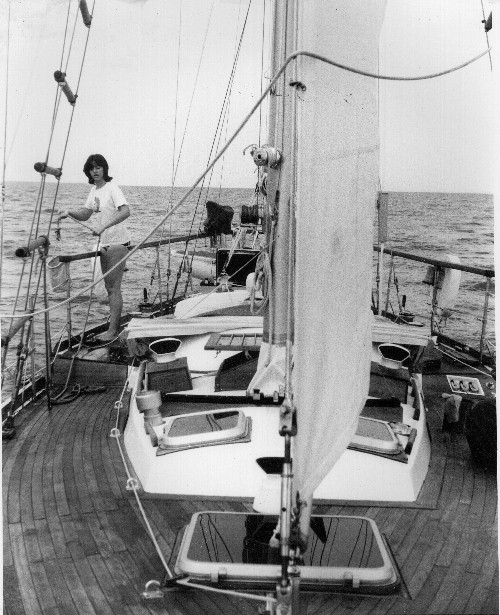
The molds for this boat's hull have just been located and are available for sale.
Specifications
| L.O.A. | 46' | Hull | Fiberglass |
|---|---|---|---|
| L.W.L. | 31' 3" | Power | 55hp diesel |
| Beam | 12' | Displacement | 25,000 lbs |
| Draft — C/B Up | 4' 11" | Berths | 6–8 |
| Draft — C/B Down | 10' 1" | Designer | Bill Tripp Jr |
Sail Area
| Main | 348 sq ft |
|---|---|
| Mizzen | 135 sq ft |
| Jib | 335 sq ft |
| Genoa #1 | 668 sq ft |
| Genoa #2 | 478 sq ft |
| Genoa #3 | 357 sq ft |
Drawing
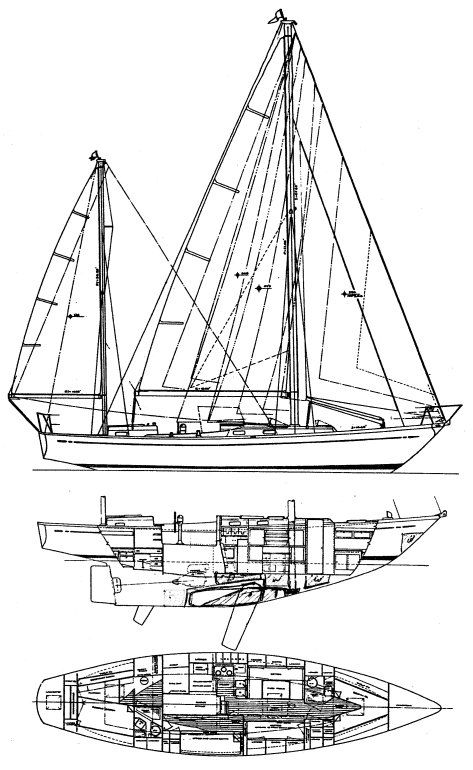
Builder's sail plan, profile and accommodation plan for the Grampian 46 yawl, Bill Tripp Jr.'s design. Click to open the full-size drawing.
Source: Grampian 46 on listingsport.com.
Specifications on sailboatdata.com
Figures are transcribed from the sailboatdata.com record linked below and may differ from the owners’ figures elsewhere on this page. Metric values are theirs.
| Hull type | Keel/centreboard | Rig | Masthead yawl |
|---|---|---|---|
| L.O.A. | 46.00 ft / 14.02 m | L.W.L. | 33.00 ft / 10.06 m |
| Beam | 12.00 ft / 3.66 m | Draft | 10.33 ft / 3.15 m (board down); 5.16 ft / 1.57 m (up) |
| Displacement | 25,000 lb / 11,340 kg | Ballast | 9,000 lb / 4,082 kg (lead) |
| Sail area (reported) | 881 ft² / 81.85 m² | Construction | Fibreglass |
| First built | 1969 | Last built | 1976 |
| Number built | 12 | Builder | Grampian Marine |
| Designer | William H. Tripp Jr. |
Rig and sail particulars
| I | 47.62 ft / 14.51 m | J | 16.67 ft / 5.08 m |
|---|---|---|---|
| P | 41.00 ft / 12.50 m | E | 17.00 ft / 5.18 m |
| PY (mizzen) | 26.50 ft / 8.08 m | EY (mizzen) | 10.25 ft / 3.12 m |
| S.A. fore | 396.91 ft² / 36.87 m² | S.A. main | 348.50 ft² / 32.38 m² |
| S.A. total (100% fore + main) | 745.41 ft² / 69.25 m² | S.A. / Displ. (from rig) | 14.00 |
| Est. forestay length | 50.45 ft / 15.38 m |
Calculated ratios
| S.A. / Displ. | 16.55 | Bal. / Displ. | 36.00 |
|---|---|---|---|
| Displ. / Length | 310.56 | Comfort ratio | 38.26 |
| Capsize screening | 1.64 | S# | 1.44 |
| Hull speed | 7.70 kn | Pounds / inch immersion | 1,414.95 |
Their notes: Apart from the unique option of tandem centreboards, the Grampian 46 seems to be nearly the same design as the US 46; both are probably from the tooling used for the earlier US 41.
Source: Grampian 46 — sailboatdata.com. Ratio definitions are on sailboatdata.
Jibs and genoas
Headsails are named by how far they overlap the mast: the LP (from the clew straight to the luff) as a percentage of J, the base of the foretriangle from the mast to the forestay.
Sails measured for the Grampian 46
| Sail | Luff | Leech | Foot | LP | Area |
|---|---|---|---|---|---|
| Genoa | 46′ 6″ | 43′ 0″ | 23′ 9″ | 21′ 10″ (131%) | about 507 ft² |
| Asymmetrical spinnaker | 48′ 6″ | 45′ 6″ | 28′ 6″ | — | about 1,037 ft² |
Measurements from Good Old Boat’s sail database; the LP and areas are worked out from them.
Usual headsail sizes for this rig
| Name | LP % | LP | Area |
|---|---|---|---|
| #1 genoa | 150–155% | 25′ 0″ – 25′ 10″ | about 599–619 ft² |
| #2 genoa | 130–135% | 21′ 8″ – 22′ 6″ | about 519–539 ft² |
| Lapper (110% jib) | 110% | 18′ 4″ | about 439 ft² |
| Working jib or #3 | 90–100% | 15′ 0″ – 16′ 8″ | about 360–400 ft² |
| Heavy-weather jib | — | — | up to 306 ft² |
| Storm jib | — | — | up to 113 ft², with a luff up to 32′ 10″ |
Worked out from I = 47.62′ and J = 16.67′: a forestay of about 50′ 5″, and a full-hoist luff of about 47′ 11″ (95% of the forestay; area ≈ ½ × luff × LP). The heavy-weather and storm jib limits are World Sailing’s offshore rules: 13.5% and 5% of I², and a storm jib’s luff no more than 65% of the forestay.
The original sails
| Sail | Area | LP at full hoist |
|---|---|---|
| #1 genoa | 668 ft² | about 27′ 10″ (167%) |
| #2 genoa | 478 ft² | about 19′ 11″ (120%) |
| #3 genoa | 357 ft² | about 14′ 11″ (89%) |
| Jib | 335 ft² | about 14′ 0″ (84%) |
Grampian’s own sail areas, from the specifications above, worked out as if each sail had a full-hoist luff. A genoa over 160% is larger than the 150–155% that’s usually the biggest today. A small sail with a low percentage may have been cut with a shorter luff.
Boats vary, and a roller furler shortens the luff by a foot or so. Measure your own forestay before ordering a sail, and have the sailmaker check.