 Grampian Sailboats
Grampian 30
Designed by Alex McGruer — about 350 built in Canada and the USA.
Photos
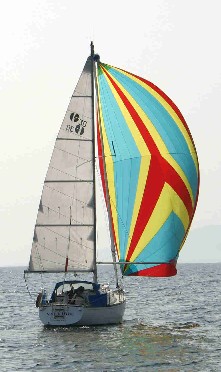
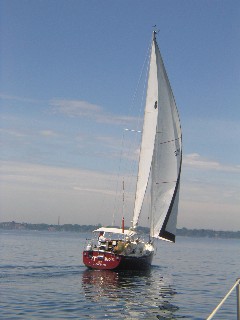
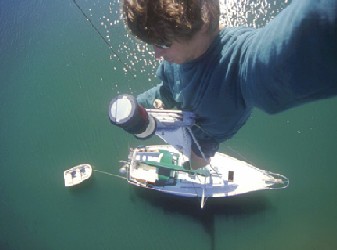
Specifications
| L.O.A. | 29' 9" | Hull | Fibreglass |
|---|---|---|---|
| L.W.L. | 25' 6" | Power | Atomic 4 or Yanmar |
| Beam | 9' 6" | Ballast | 3870 lbs |
| Draft — Full Keel | 4' 8" | Displacement | 8600 lbs |
| Draft — C/B | 3' 3" | Headroom | 6' 4" |
| Sail Area — Main | 190 sq. ft. | Berths | 5 (6 optional) |
| Sail Area — Working Jib | 143 sq. ft. | Sail Area — Genoa #1 | 340 sq. ft. |
| Sail Area — Genoa #2 | 300 sq. ft. | Designer | Alex McGruer |
Specifications on sailboatdata.com
Figures are transcribed from the sailboatdata.com record linked below and may differ from the owners’ figures elsewhere on this page. Metric values are theirs.
| Hull type | Fin keel, spade rudder | Rig | Masthead sloop |
|---|---|---|---|
| L.O.A. | 29.75 ft / 9.07 m | L.W.L. | 25.50 ft / 7.77 m |
| Beam | 9.50 ft / 2.90 m | Draft | 4.67 ft / 1.42 m |
| Displacement | 8,600 lb / 3,901 kg | Ballast | 3,870 lb / 1,755 kg |
| Sail area (reported) | 425 ft² / 39.48 m² | Construction | Fibreglass |
| First built | 1969 | Last built | 1977 |
| Number built | 400 | Builder | Grampian Marine Ltd. (Canada) |
| Designer | Alex McGruer | Engine (original) | Universal Atomic 4 (gas) |
| Fuel | 10 gal / 38 L | Water | 15 gal / 57 L |
Rig and sail particulars
| I | 36.90 ft / 11.25 m | J | 11.00 ft / 3.35 m |
|---|---|---|---|
| P | 31.00 ft / 9.45 m | E | 12.00 ft / 3.66 m |
| S.A. fore | 202.95 ft² / 18.85 m² | S.A. main | 186.00 ft² / 17.28 m² |
| S.A. total (100% fore + main) | 388.95 ft² / 36.13 m² | S.A. / Displ. (from rig) | 14.87 |
| Est. forestay length | 38.50 ft / 11.73 m |
Calculated ratios
| S.A. / Displ. | 16.25 | Bal. / Displ. | 45.00 |
|---|---|---|---|
| Displ. / Length | 231.54 | Comfort ratio | 24.74 |
| Capsize screening | 1.86 | S# | 2.13 |
| Hull speed | 6.77 kn | Pounds / inch immersion | 865.59 |
Their notes: Keel/centreboard version: draft 7.00 ft / 2.13 m down, 3.00 ft / 0.91 m up. Tall mast (as drawn): I 40.00 ft, J 11.50 ft, P 35.50 ft, E 11.00 ft. A cutter rig with bowsprit was offered as an option in 1974.
Source: Grampian 30 — sailboatdata.com. Ratio definitions are on sailboatdata.
Jibs and genoas
Headsails are named by how far they overlap the mast: the LP (from the clew straight to the luff) as a percentage of J, the base of the foretriangle from the mast to the forestay.
Sails measured for the Grampian 30
| Sail | Luff | Leech | Foot | LP | Area |
|---|---|---|---|---|---|
| Genoa (standard rig) | 35′ 6″ | 33′ 3″ | 15′ 10″ | 14′ 9″ (134%) | about 262 ft² |
| Jib (tall rig) | 30′ 0″ | 27′ 6″ | 11′ 0″ | 10′ 1″ (88%) | about 151 ft² |
| Asymmetrical spinnaker (standard rig) | 37′ 0″ | 35′ 0″ | 18′ 3″ | — | about 506 ft² |
Measurements from Good Old Boat’s sail database (and its tall rig); the LP and areas are worked out from them. One measured sail is left out because its sides can’t all be right.
Usual headsail sizes for the standard rig
| Name | LP % | LP | Area |
|---|---|---|---|
| #1 genoa | 150–155% | 16′ 6″ – 17′ 1″ | about 302–312 ft² |
| #2 genoa | 130–135% | 14′ 4″ – 14′ 10″ | about 262–272 ft² |
| Lapper (110% jib) | 110% | 12′ 1″ | about 221 ft² |
| Working jib or #3 | 90–100% | 9′ 11″ – 11′ 0″ | about 181–201 ft² |
| Heavy-weather jib | — | — | up to 183 ft² |
| Storm jib | — | — | up to 68 ft², with a luff up to 25′ 0″ |
Worked out from I = 36.9′ and J = 11′: a forestay of about 38′ 6″, and a full-hoist luff of about 36′ 7″ (95% of the forestay; area ≈ ½ × luff × LP). The heavy-weather and storm jib limits are World Sailing’s offshore rules: 13.5% and 5% of I², and a storm jib’s luff no more than 65% of the forestay.
Usual headsail sizes for the tall rig
| Name | LP % | LP | Area |
|---|---|---|---|
| #1 genoa | 150–155% | 17′ 3″ – 17′ 10″ | about 341–352 ft² |
| #2 genoa | 130–135% | 14′ 11″ – 15′ 6″ | about 296–307 ft² |
| Lapper (110% jib) | 110% | 12′ 8″ | about 250 ft² |
| Working jib or #3 | 90–100% | 10′ 4″ – 11′ 6″ | about 205–227 ft² |
| Heavy-weather jib | — | — | up to 216 ft² |
| Storm jib | — | — | up to 80 ft², with a luff up to 27′ 1″ |
Worked out from I = 40′ and J = 11.5′ (from Good Old Boat): a forestay of about 41′ 7″, and a full-hoist luff of about 39′ 6″ (95% of the forestay; area ≈ ½ × luff × LP). The heavy-weather and storm jib limits are World Sailing’s offshore rules: 13.5% and 5% of I², and a storm jib’s luff no more than 65% of the forestay.
The original sails
| Sail | Area | LP at full hoist |
|---|---|---|
| #1 genoa | 340 ft² | about 18′ 7″ (169%) |
| #2 genoa | 300 ft² | about 16′ 5″ (149%) |
| Working jib | 143 ft² | about 7′ 10″ (71%) |
Grampian’s own sail areas, from the specifications above, worked out as if each sail had a full-hoist luff. A genoa over 160% is larger than the 150–155% that’s usually the biggest today. A small sail with a low percentage may have been cut with a shorter luff.
Sails from a tall rig won’t fit a standard one. Grampian’s original sail areas are worked out here on the standard rig.
Boats vary, and a roller furler shortens the luff by a foot or so. Measure your own forestay before ordering a sail, and have the sailmaker check.
More about the Grampian 30
Grampian 30 Tall Rigs
I was asked how many G30 Tall Rigs were built. Gill Bibby provided this information:
There are no numbers as to how many tall rigs vs. standard ones were built. It was an extra that was placed as the vessels were ordered. The main difference was that the sail shape changed to go higher, as was the mast and boom. The mast was taller and the boom was shorter on the tall rigs. This moved the center of effort in the sail plan to a higher spot. Sails from a tall rig will not fit the short rig. I will have to read the sail plans to be more precise on the actual figures of sail area square footage and center of effort.
— Gill Bibby
High Praise for a Grampian 30
I had “Prospero” built over the 1973–1974 winter in Oakville. She is hull 226. “Prospero” has been successfully sailed single-handed to Bermuda twice, and to California by way of the Panama Canal — from Panama to Newport Beach we were at sea 44 days. This has been a wonderful boat, and has caused me virtually no trouble. The voyages were without problems, other than one knockdown in heavy weather off the coast of Venezuela. She righted herself immediately and we made Cartagena easily. The boat currently sits at The Old Lyme Marina in Connecticut. She looks better than new — she is better than new. I now sail New England. I have thought of going south. I could live on this boat for the rest of my life.
— George Miller